
WELCOME TO THE DASSIE GROW DIARIES
WELCOME TO THE DASSIE GROW DIARIES
WELCOME TO THE DASSIE GROW DIARIES
Where dassies and gardening collide
Where dassies and gardening collide
Where dassies and gardening collide

Lucy

Charles

Patric
Welcome to my grow diary.
I hope you find it interesting, and maybe even a nice distraction from all the noise that's out there right now.
So, where did the name Dassie Grows come from?
I've always had a soft spot for dassies. Never heard of them? They're small mammals (often called rock rabbits, even though they're actually more closely related to elephants) that live among the rocks and mountains of sub-Saharan Africa. Growing up in South Africa, I saw them all the time, so naming this little project after them felt like the perfect fit.
It gives the site a small nod to where I'm from, even though I don't live there anymore, but that's a story for another day. By day, I'm a product designer working in banking and financial services in London.
I spend my time designing software and digital products for banks, so this project is my excuse to get away from screens for a while and do something completely different.
Welcome to my grow diary.
I hope you find it interesting, and maybe even a nice distraction from all the noise that's out there right now.
So, where did the name Dassie Grows come from?
I've always had a soft spot for dassies. Never heard of them? They're small mammals (often called rock rabbits, even though they're actually more closely related to elephants) that live among the rocks and mountains of sub-Saharan Africa. Growing up in South Africa, I saw them all the time, so naming this little project after them felt like the perfect fit.
It gives the site a small nod to where I'm from, even though I don't live there anymore, but that's a story for another day. By day, I'm a product designer working in banking and financial services in London.
I spend my time designing software and digital products for banks, so this project is my excuse to get away from screens for a while and do something completely different.
I'm Grant Taylor. Designer by day and horticulturist by night. I'm not actually a dassie, but I do have a special interest in these furry little creatures.
For the past 30 years, I've spent countless hours observing dassies in the mountains and along coastal regions. I study their ways, learn their patience, and practice their teachings.
Fun fact: I discovered that you can actually communicate with dassies. However, you can't speak to them directly or make eye contact unless you're wearing sunglasses.
My discovery of the dassies' love of gardening happened entirely by accident. I was walking along the coastline one day, attempting to spot dolphins in the distance.
Instead, I tripped over what I believed to be an octopus, tumbled down a grassy embankment, and rolled directly into a large dassie colony.
I've been growing plants for over 20 years. I wouldn't call myself an expert, but I've picked up a decent understanding of how plants grow and the relationship they have with the soil beneath them. The tiny ecosystem around the roots, the rhizosphere, is fascinating, and the way microbes, fungi and beneficial bacteria all work together never stops amazing me.
Mycology, in particular, absolutely blows my mind. The more I learn, the more I realise how much there is still to discover.
This website is simply a place for me to document my indoor grows, share what I'm learning, and occasionally write about things that catch my interest. There's no business, no sponsored content, and no hidden agenda, just honest diary entries about my plants, the successes, the failures, and everything in between.
I hope you enjoy following along.
I've been growing plants for over 20 years. I wouldn't call myself an expert, but I've picked up a decent understanding of how plants grow and the relationship they have with the soil beneath them. The tiny ecosystem around the roots, the rhizosphere, is fascinating, and the way microbes, fungi and beneficial bacteria all work together never stops amazing me.
Mycology, in particular, absolutely blows my mind. The more I learn, the more I realise how much there is still to discover.
This website is simply a place for me to document my indoor grows, share what I'm learning, and occasionally write about things that catch my interest. There's no business, no sponsored content, and no hidden agenda, just honest diary entries about my plants, the successes, the failures, and everything in between.
I hope you enjoy following along.
I was fairly dazed, but the first thing I noticed was that they had cultivated small, meticulously maintained gardens filled with indigenous plants.
The air was thick with the smell of fermenting seaweed, which I suspect they were using as a natural fertiliser. It would certainly explain why everything looked so lush.
Unfortunately, I was unable to communicate that I meant no harm. The colony was understandably hostile, and I decided not to linger.
From that day onward, I was inspired. I had discovered something both remarkable and deeply amusing. After all, who would believe me? I've kept this secret for years, but I think it's finally time to share what I've learned.
I hope you enjoy what I have to share.
Lucy
Charles
Patric
GROWING LIKE A DASSIE
The art of patience and perseverance
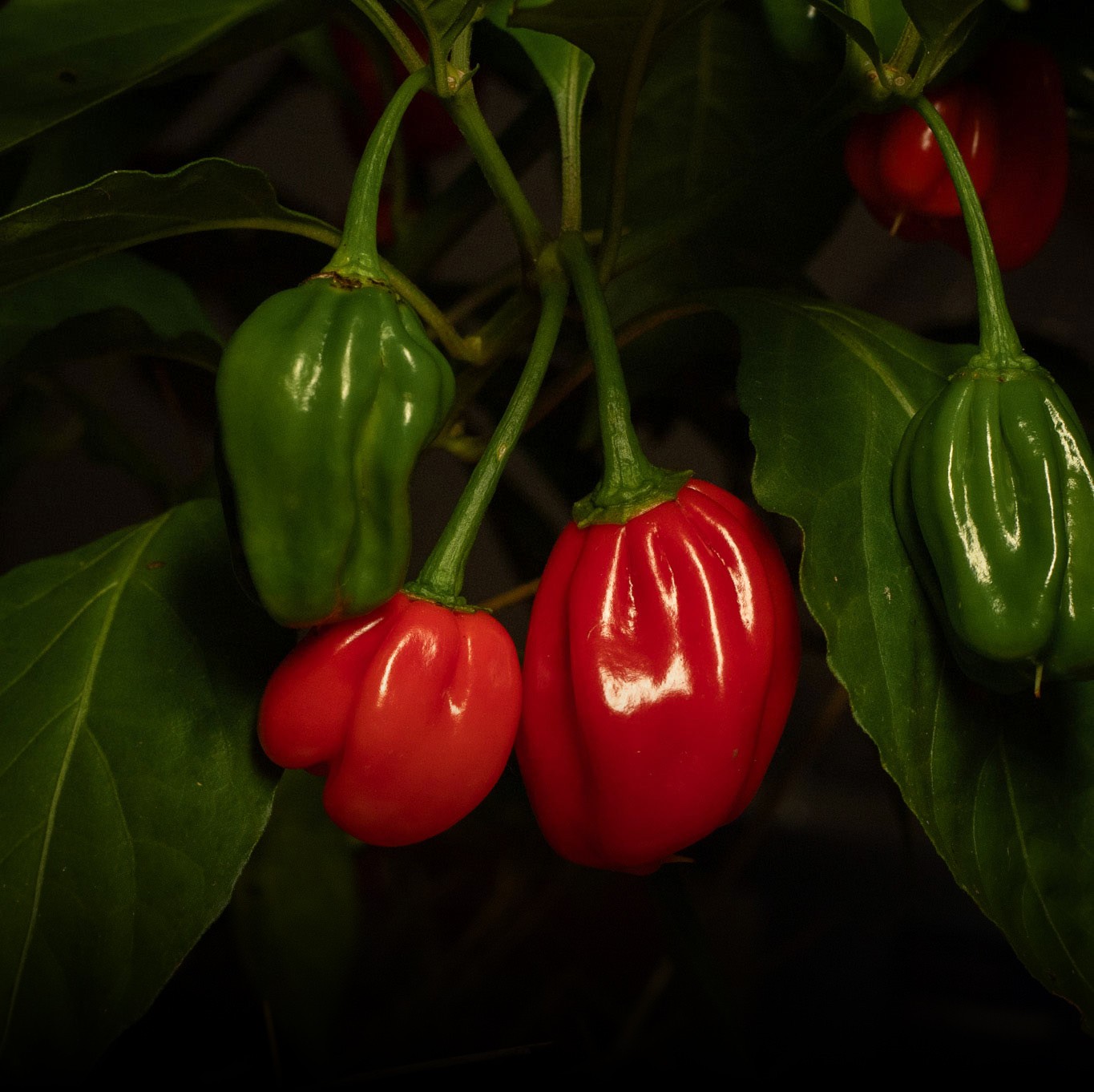
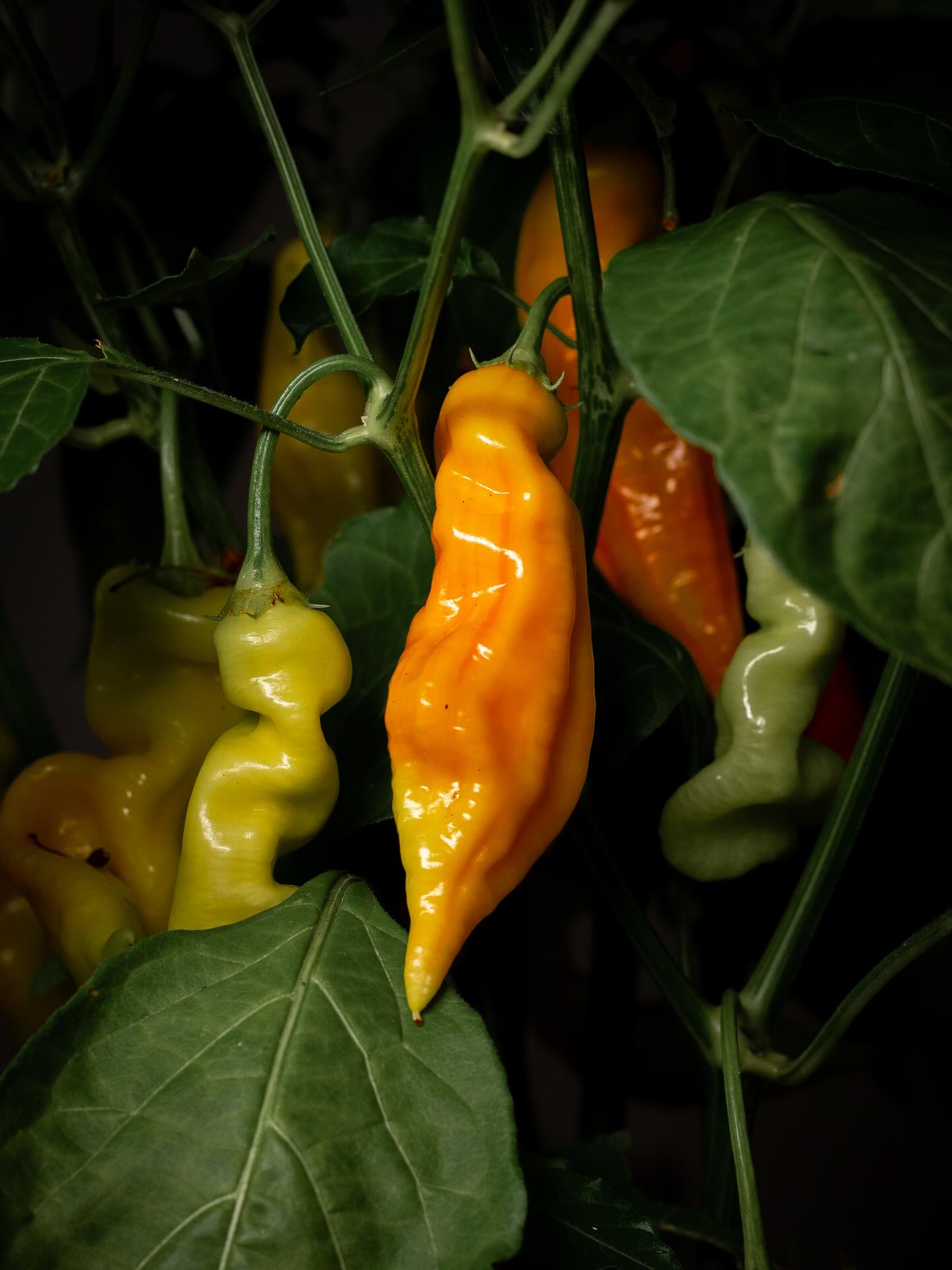
This is a recent photo of some Scotch Bonnet peppers I've been growing. They can be surprisingly tricky to grow unless you happen to live somewhere with a tropical climate. It took me a long time to figure out what they needed, and I definitely had my fair share of failures along the way.
If there's one thing growing plants has taught me, it's that patience is everything. You have to be willing to learn, accept that you'll make mistakes, and leave your ego at the door. The plants don't care how confident you are, they'll teach you something new every time.
THINKING LIKE A
DASSIE
The art of patience
and perseverance
This is a recent photo of some Scotch Bonnet peppers I've been growing. They can be surprisingly tricky to grow unless you happen to live somewhere with a tropical climate. It took me a long time to figure out what they needed, and I definitely had my fair share of failures along the way.
If there's one thing growing plants has taught me, it's that patience is everything. You have to be willing to learn, accept that you'll make mistakes, and leave your ego at the door. The plants don't care how confident you are, they'll teach you something new every time.
GROWING LIKE A DASSIE
The art of patience and perseverance
This is a recent photo of some Scotch Bonnet peppers I've been growing. They can be surprisingly tricky to grow unless you happen to live somewhere with a tropical climate. It took me a long time to figure out what they needed, and I definitely had my fair share of failures along the way.
If there's one thing growing plants has taught me, it's that patience is everything. You have to be willing to learn, accept that you'll make mistakes, and leave your ego at the door. The plants don't care how confident you are, they'll teach you something new every time.
CURRENT GROWING PROJECT
Hydroponic Peppers
Hydroponic Peppers
LAST UPDATE
11June


So much has happened in the past month; it actually feels like years. All in all, the plant is looking fantastic and has four really decent-sized peppers, which I'm really excited about.
I was hoping for a few more. I've even tried manually pollinating the flowers with a small paintbrush just to see if more peppers would develop.
We also had two weeks of really hot weather, which is a bit unusual in the UK for this time of year. Temperatures reached 35°C in the tent, so I ended up leaving the tent flap open while making sure the cats didn't have access, because they can become a menace if they get inside.
I then noticed a spike in nutrient uptake, which could have been related to the heat or a build-up of salts in the growing medium. I've been running a very low EC of around 600–800 to avoid over-fertilisation. I checked the pH in case there was some sort of nutrient lockout, but everything was fine.
So much has happened in the past month; it actually feels like years. All in all, the plant is looking fantastic and has four really decent-sized peppers, which I'm really excited about.
I was hoping for a few more. I've even tried manually pollinating the flowers with a small paintbrush just to see if more peppers would develop.
We also had two weeks of really hot weather, which is a bit unusual in the UK for this time of year. Temperatures reached 35°C in the tent, so I ended up leaving the tent flap open while making sure the cats didn't have access, because they can become a menace if they get inside.
I then noticed a spike in nutrient uptake, which could have been related to the heat or a build-up of salts in the growing medium. I've been running a very low EC of around 600–800 to avoid over-fertilisation. I checked the pH in case there was some sort of nutrient lockout, but everything was fine.
I must say, I'm pretty impressed with this line of nutrients. I haven't had to adjust anything. I then added plain water to the reservoir for a few days to help counter the excess nutrients.
I also trimmed a lot of branches, as there was simply too much growth and not enough airflow. I probably removed around 50% of the foliage.
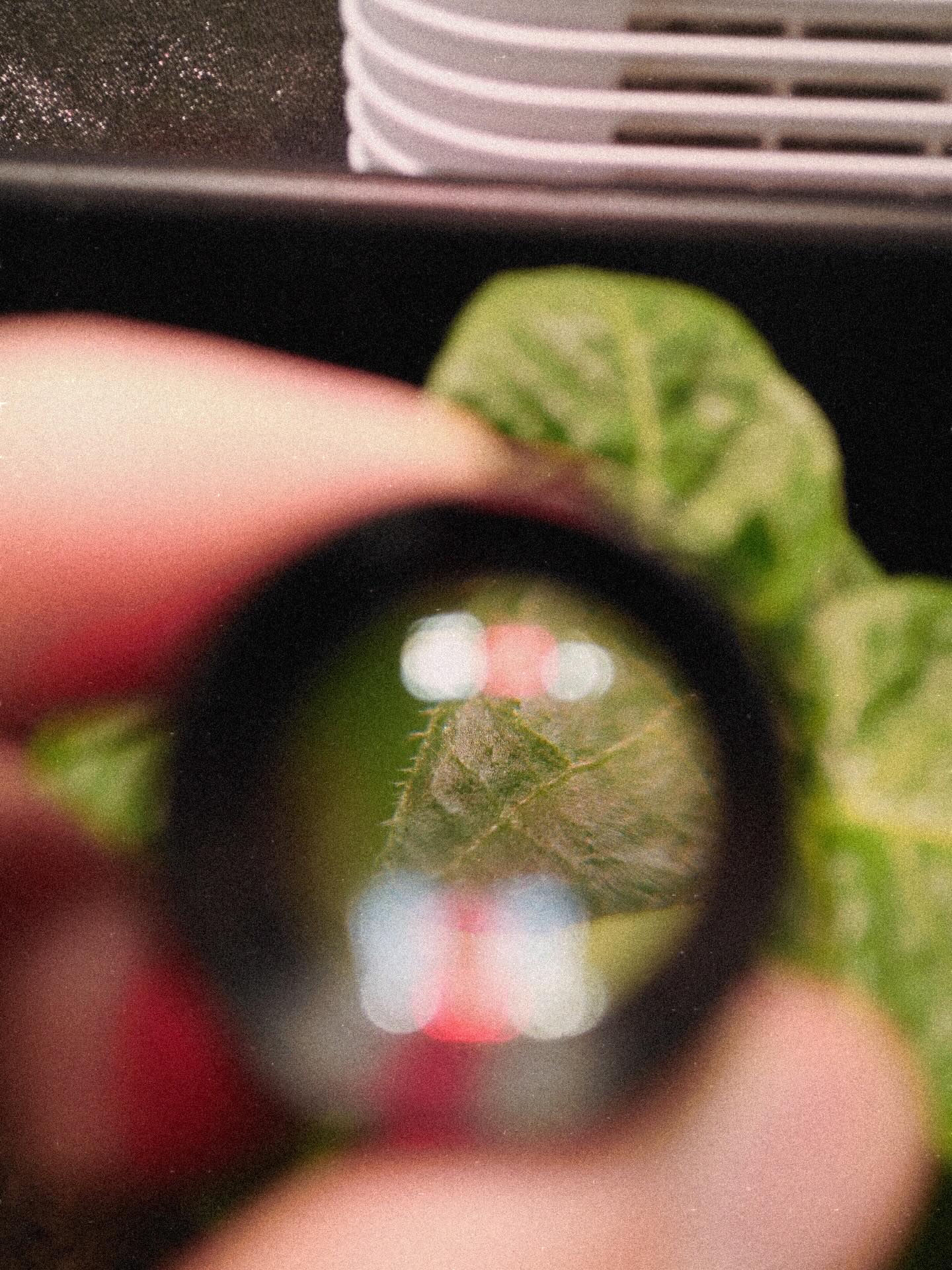
A couple of weeks later, the plant is looking fantastic: lovely smooth leaves, no wrinkles, and a healthy shine. It's also a lighter shade of green rather than the dark green it was previously. The leaves are almost touching the light now, so I may have to do a second round of trimming.
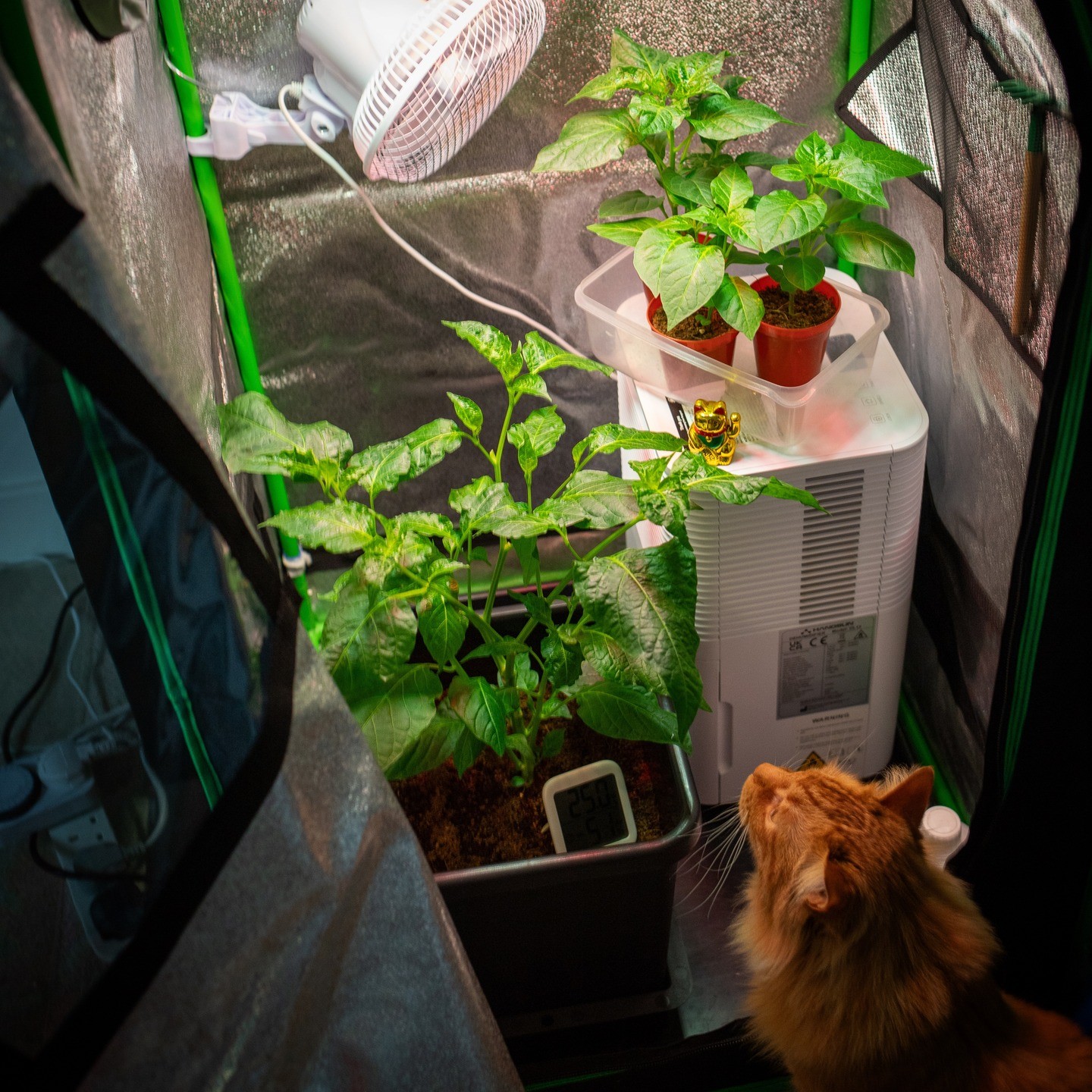
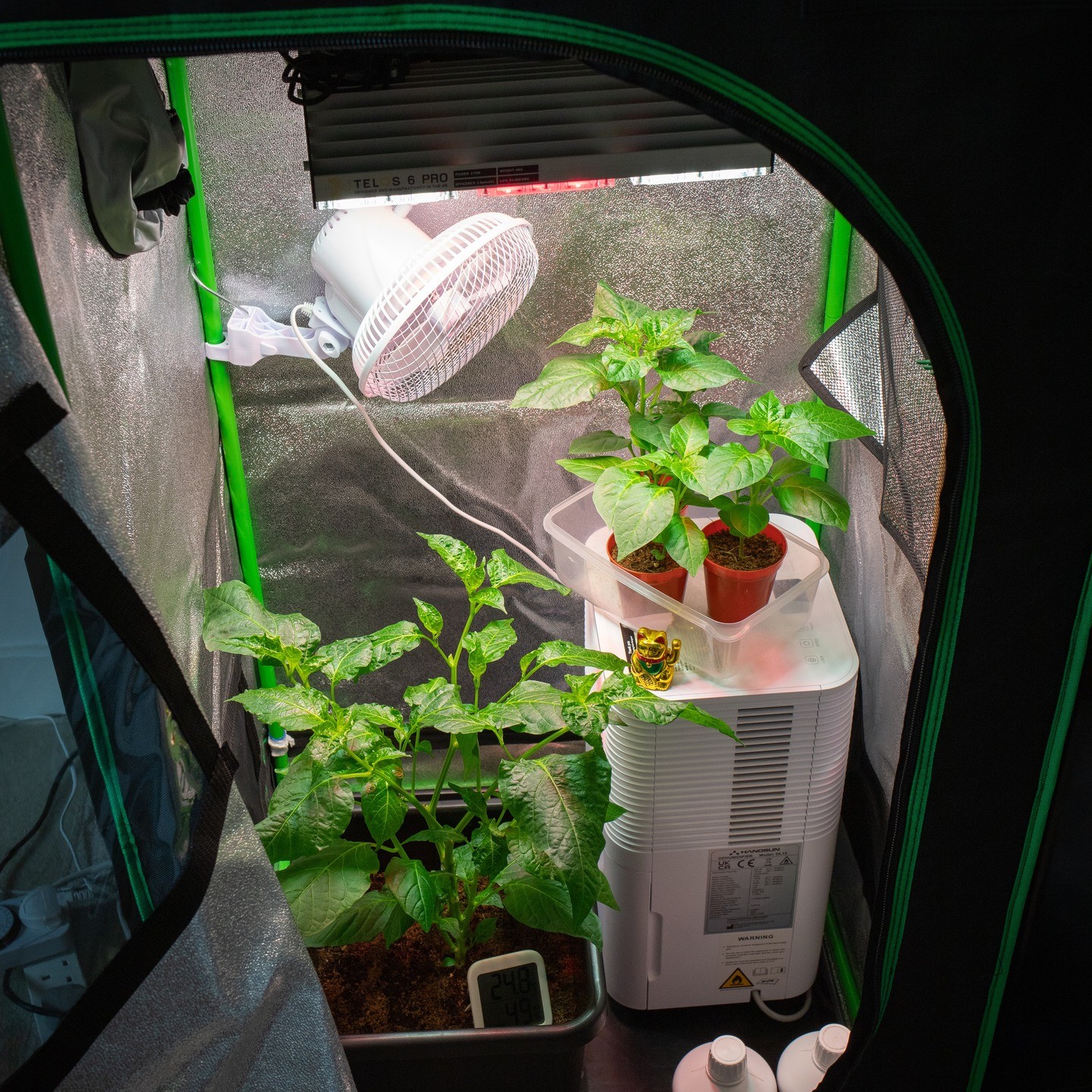
I have to say, the real hero of this grow has been the dehumidifier. It's the first time I've kept one inside the tent. I also have a fan constantly blowing air through the canopy, and I feel this has been a major factor in the success I've had so far.
I must say, I'm pretty impressed with this line of nutrients. I haven't had to adjust anything. I then added plain water to the reservoir for a few days to help counter the excess nutrients.
I also trimmed a lot of branches, as there was simply too much growth and not enough airflow. I probably removed around 50% of the foliage.
A couple of weeks later, the plant is looking fantastic: lovely smooth leaves, no wrinkles, and a healthy shine. It's also a lighter shade of green rather than the dark green it was previously. The leaves are almost touching the light now, so I may have to do a second round of trimming.
I have to say, the real hero of this grow has been the dehumidifier. It's the first time I've kept one inside the tent. I also have a fan constantly blowing air through the canopy, and I feel this has been a major factor in the success I've had so far.
LAST UPDATE
6May
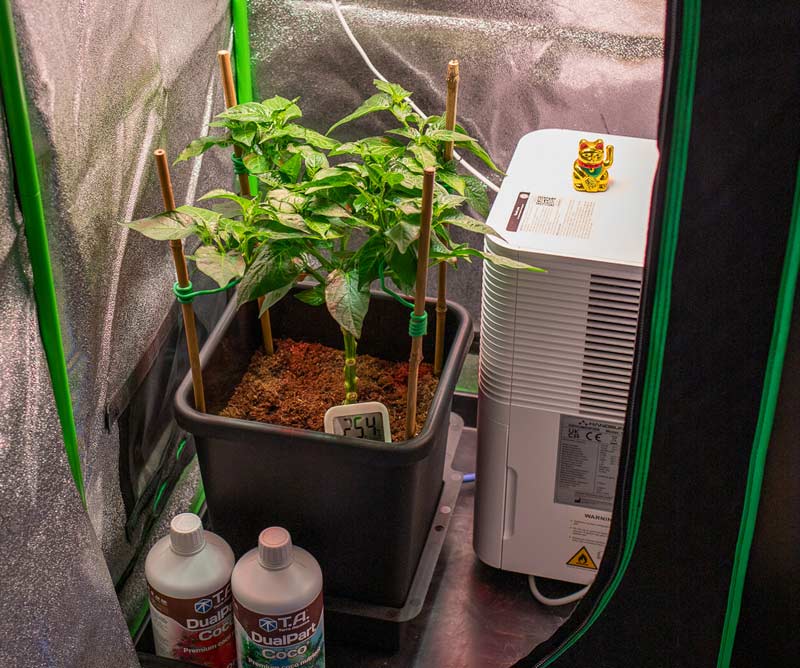
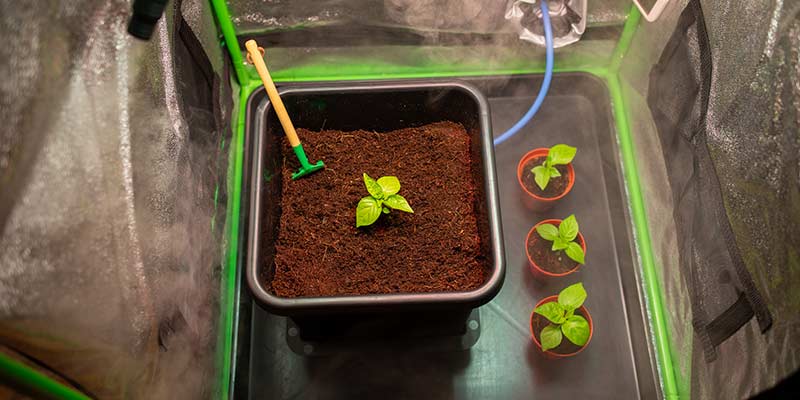
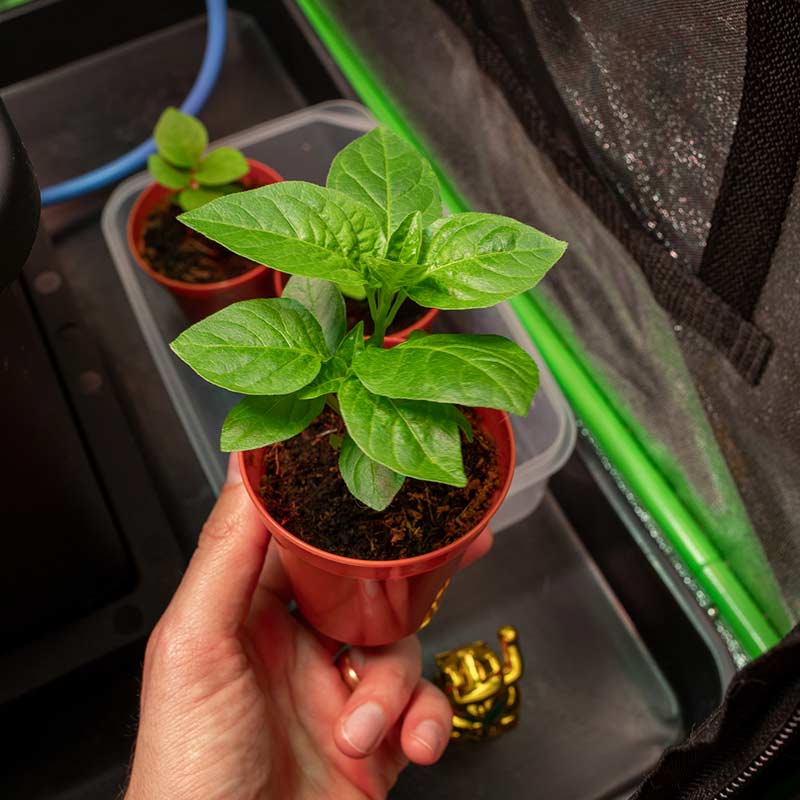
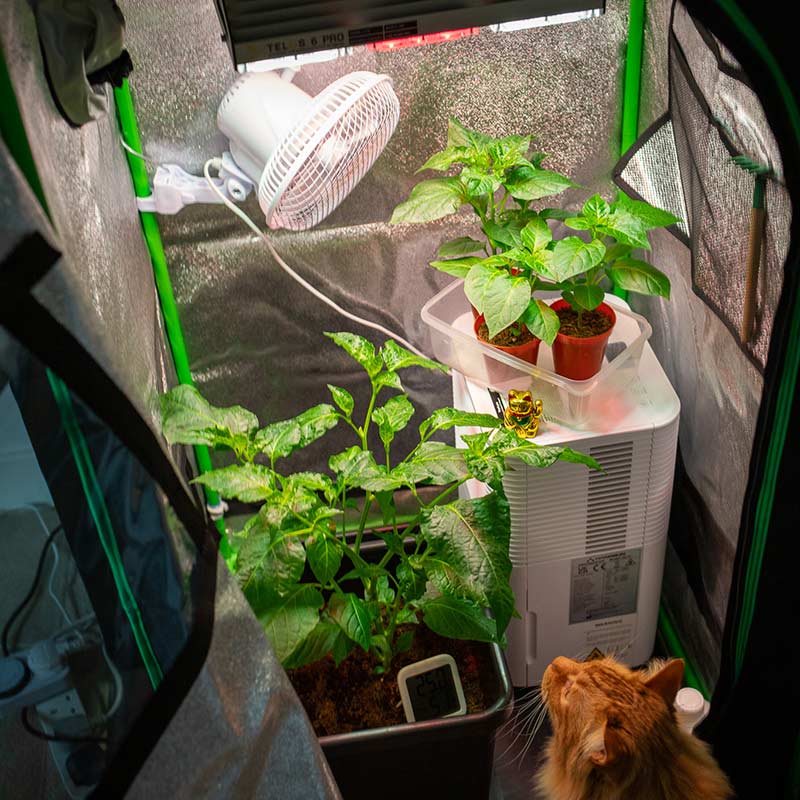
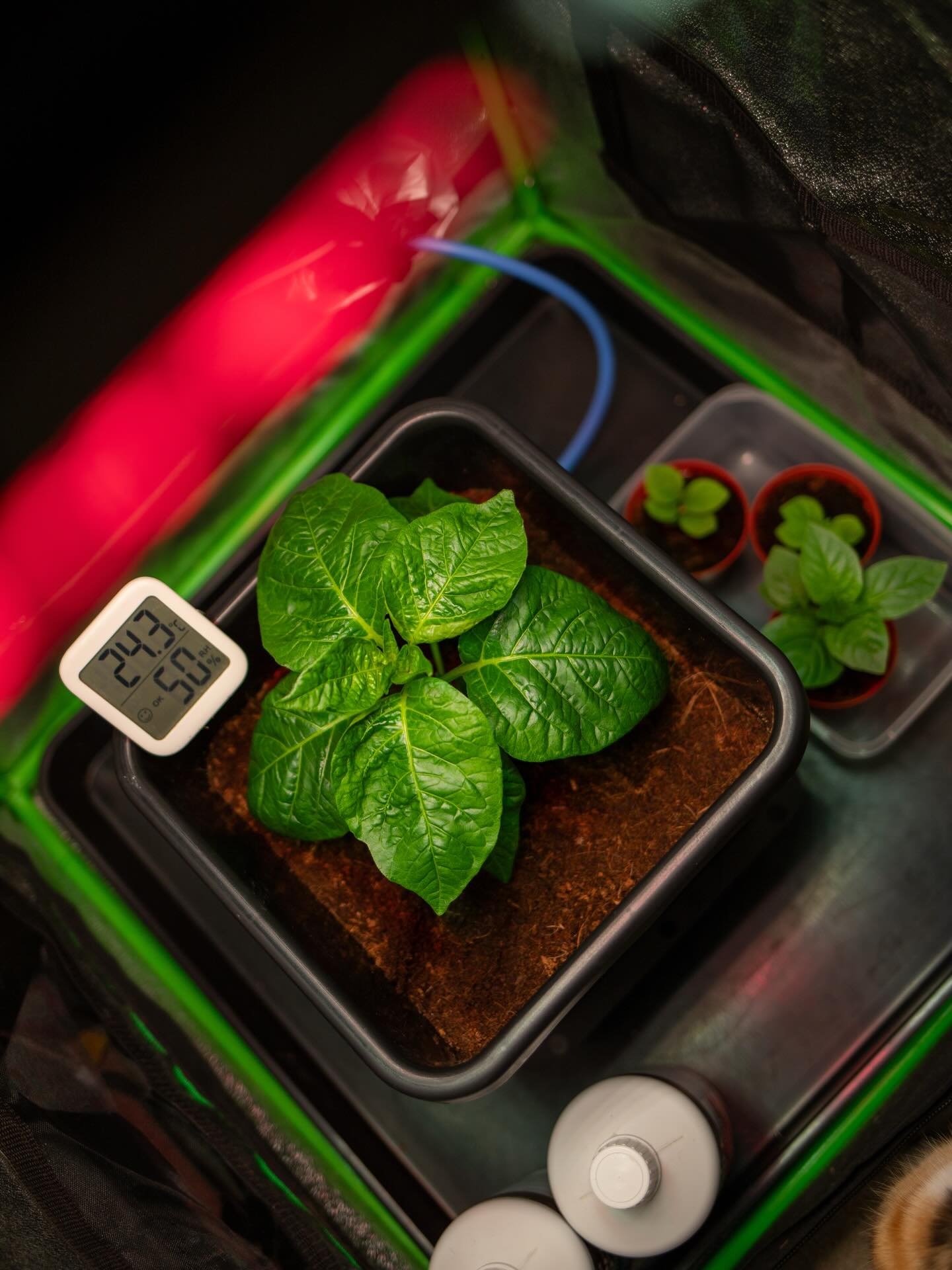
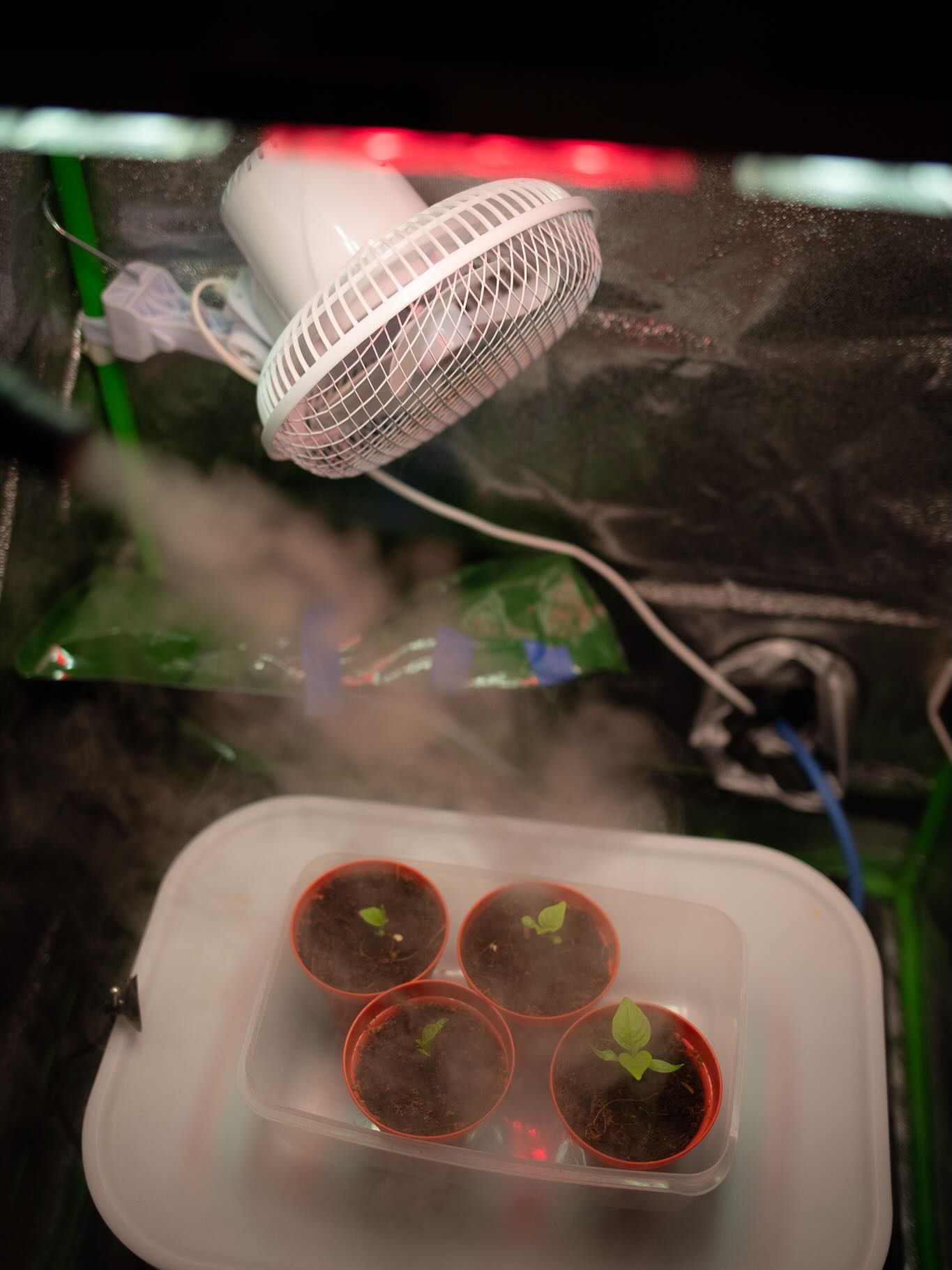
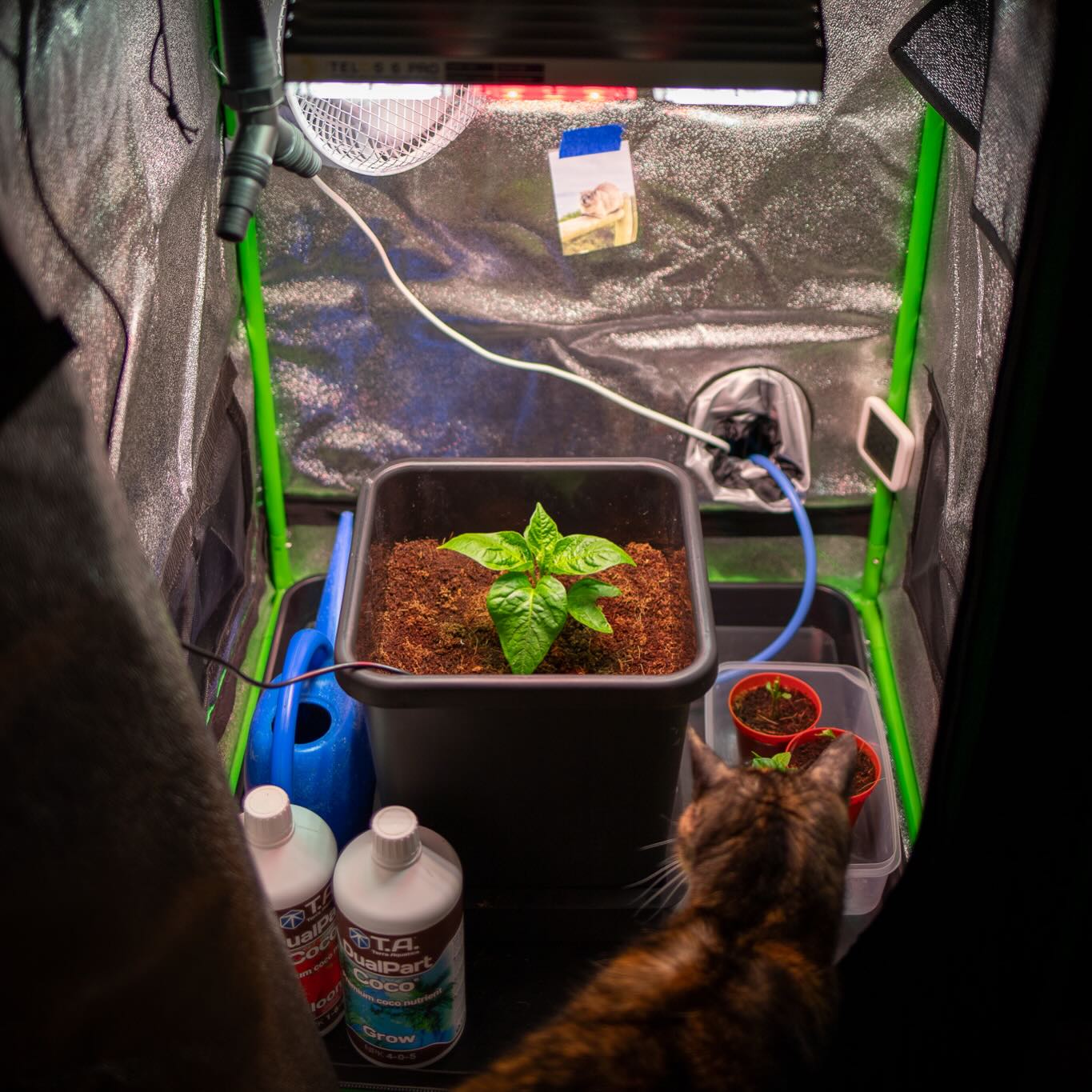
I transferred the smaller plants outside as space in the tent is limited. The 2×2 tent is a real challenge, especially since I’ve had to keep the dehumidifier inside, so right now it’s just the dehumidifier and one plant. I’ve also removed the lower branches and leaves, generally referred to as “lollipopping,” similar to what cannabis growers do just before the flowering cycle.
Last year, I struggled with a condition known as edema, where the plant forms blisters under the leaves, causing them to become deformed and the plant to struggle. It’s mainly caused by high humidity and heat, where the plant can’t transpire fast enough, and then the problem starts. The humidity in the tent might be around 60%, but within the plant canopy it can reach 80%, and that’s the real issue.
I transferred the smaller plants outside as space in the tent is limited. The 2×2 tent is a real challenge, especially since I’ve had to keep the dehumidifier inside, so right now it’s just the dehumidifier and one plant. I’ve also removed the lower branches and leaves, generally referred to as “lollipopping,” similar to what cannabis growers do just before the flowering cycle.
Last year, I struggled with a condition known as edema, where the plant forms blisters under the leaves, causing them to become deformed and the plant to struggle. It’s mainly caused by high humidity and heat, where the plant can’t transpire fast enough, and then the problem starts. The humidity in the tent might be around 60%, but within the plant canopy it can reach 80%, and that’s the real issue.
So I’ve had to position a fan to blow air across the top of the canopy. This has really helped, and for the first time in a long while, I have a healthy-looking plant.
Generally, jalapeños and bird’s eye chillies aren’t as sensitive as the more exotic strains. The strain I’m growing is called Sugar Rush Stripey, it looks so bizarre with its blush stripes, it almost resembles candy. Not only is it a looker, it’s also very flavourful and pickles really well. Tomorrow, I’ll need to top up the reservoir, as the water level has dropped substantially. This is my first time using an AutoPot system, and I’m really impressed with it.
So I’ve had to position a fan to blow air across the top of the canopy. This has really helped, and for the first time in a long while, I have a healthy-looking plant.
Generally, jalapeños and bird’s eye chillies aren’t as sensitive as the more exotic strains. The strain I’m growing is called Sugar Rush Stripey, it looks so bizarre with its blush stripes, it almost resembles candy. Not only is it a looker, it’s also very flavourful and pickles really well. Tomorrow, I’ll need to top up the reservoir, as the water level has dropped substantially. This is my first time using an AutoPot system, and I’m really impressed with it.



CURRENT NUTRIENT LINE
Two part solution for coco
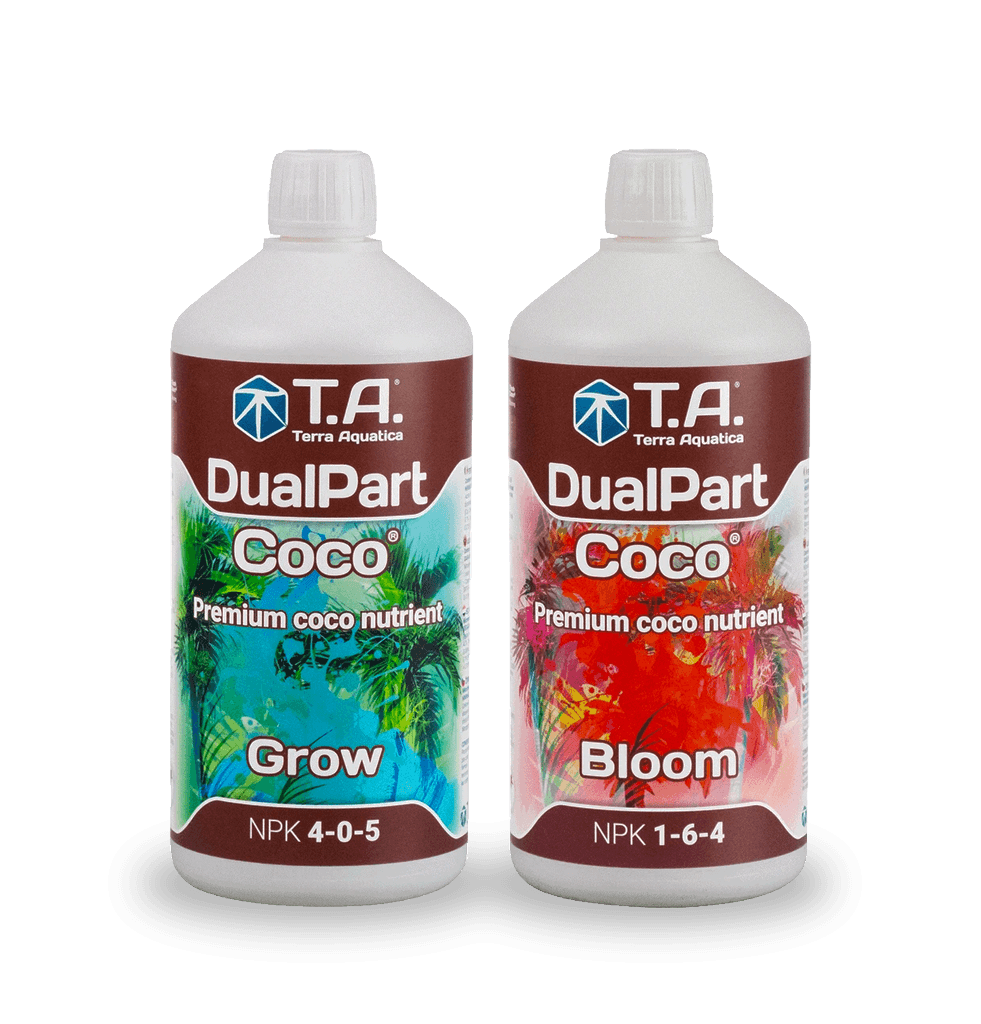
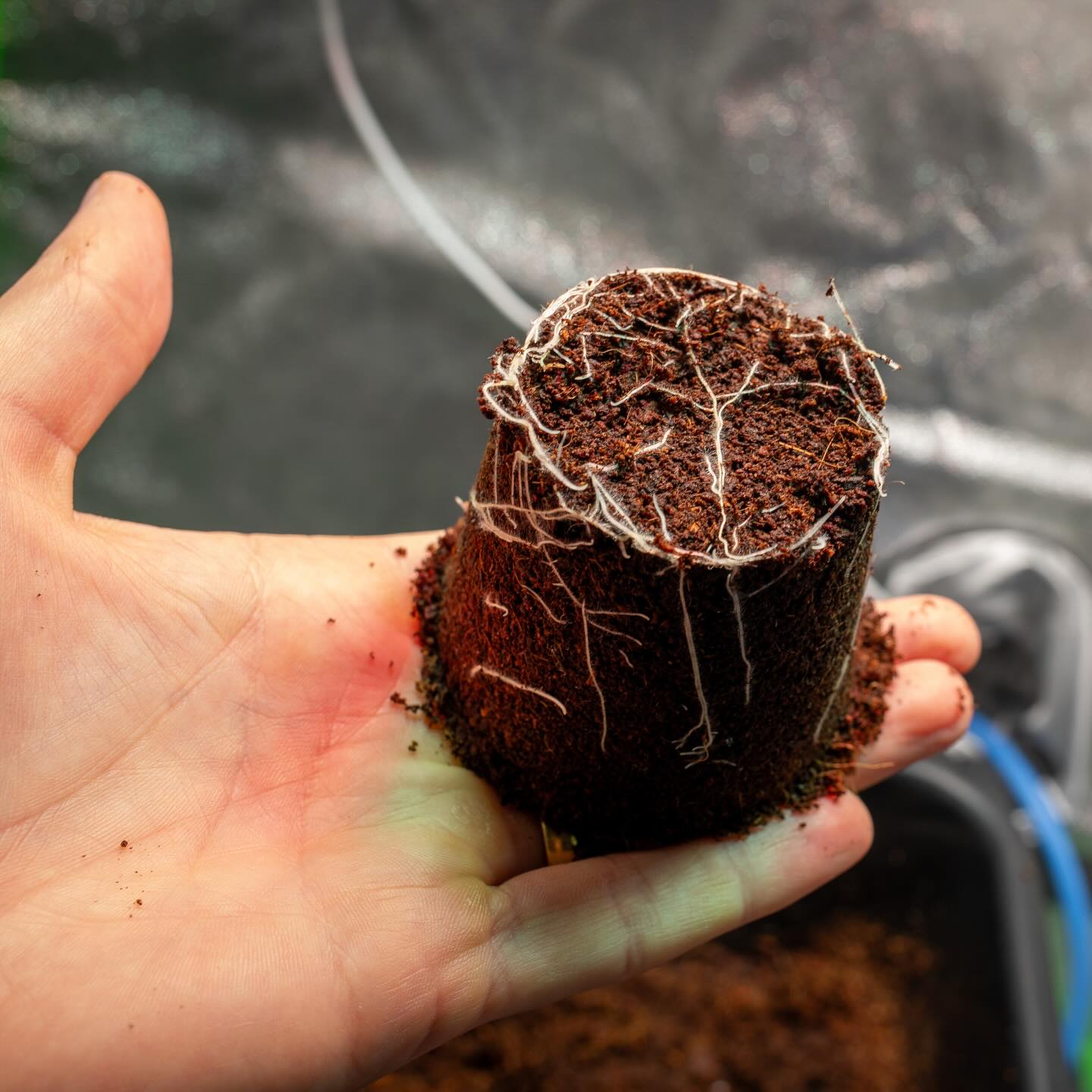
I decided to try coco as my growing medium because it’s sterile. I’m also not adding perlite, as I’ve found it brings very little benefit.
In the past I’ve used GHE nutrients with this type of setup, but this time I wanted to try something different. A friend of mine has been using this two-part nutrient system, so I decided to give it a go as well. So far it’s been working really well, I’ve just been following the instructions on the bottle.
I’m not sure if it’s luck or coincidence, but I haven’t had to adjust the pH at all, which is great. That was one of the reasons I stopped hydroponics in the first place: constantly balancing nutrient solutions and chasing numbers.
I imagine it might be a different story with a DWC system, but for now this setup is working really well.
CURRENT NUTRIENT LINE
Two part solution for coco
I decided to try coco as my growing medium because it’s sterile. I’m also not adding perlite, as I’ve found it brings very little benefit.
In the past I’ve used GHE nutrients with this type of setup, but this time I wanted to try something different. A friend of mine has been using this two-part nutrient system, so I decided to give it a go as well. So far it’s been working really well, I’ve just been following the instructions on the bottle.
I’m not sure if it’s luck or coincidence, but I haven’t had to adjust the pH at all, which is great. That was one of the reasons I stopped hydroponics in the first place: constantly balancing nutrient solutions and chasing numbers.
I imagine it might be a different story with a DWC system, but for now this setup is working really well.

LIGHTING
Telos-6 Pro Full Spectrum LED With Mesh Wireless Control
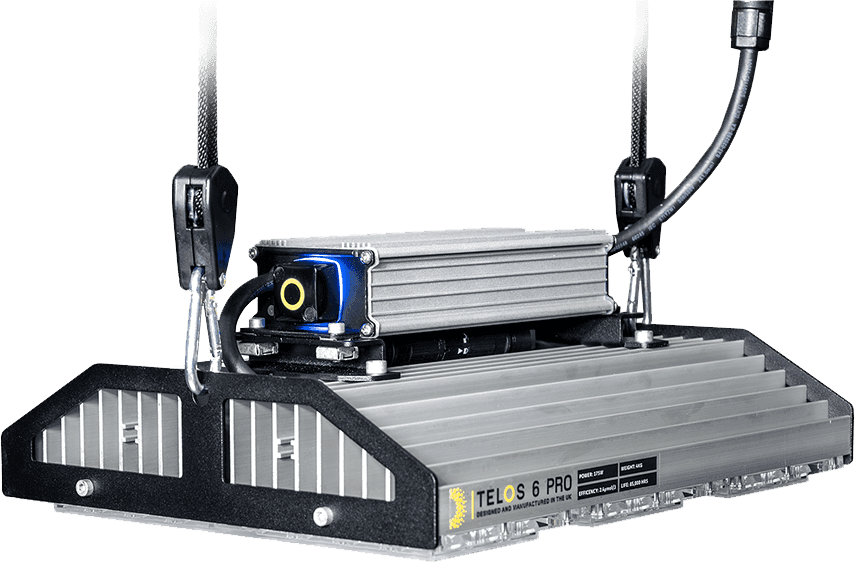
I've been using these lights for over six years now, and they've been great. The feature I find most useful is the Telos mobile app, which connects to the unit and offers a whole range of features and settings. It also emits a nice warm light onto the leaf surface.
This LED is particularly good for flowering, as it has a slightly warmer spectrum. I've used a variety of lights over the years, but I keep coming back to Telos.
People often compare and nit-pick between Osram and Samsung diodes, but at the end of the day, I only care about results and this unit delivers them. I don't have to say any more.
LIGHTING
Telos-6 Pro Full Spectrum LED With Mesh Wireless Control
I've been using these lights for over six years now, and they've been great. The feature I find most useful is the Telos mobile app, which connects to the unit and offers a whole range of features and settings. It also emits a nice warm light onto the leaf surface.
This LED is particularly good for flowering, as it has a slightly warmer spectrum. I've used a variety of lights over the years, but I keep coming back to Telos.
People often compare and nit-pick between Osram and Samsung diodes, but at the end of the day, I only care about results and this unit delivers them. I don't have to say any more.